

Is it now riskier to sell lookalike products? The developing case law in this area

Introduction
With the Supreme Court refusing Aldi leave to appeal the Court of Appeal’s decision in the Thatchers case from last year, it is now settled that Aldi infringed Thatchers’ packaging trade mark by seeking to take unfair advantage of its reputation with their Taurus-branded lookalike.
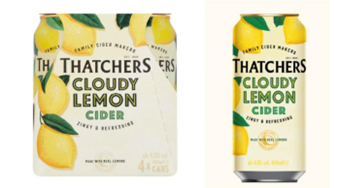
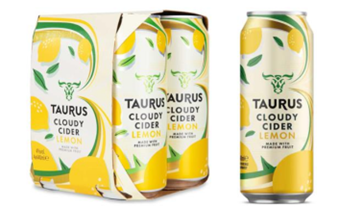
The Thatchers decision forms part of a recent spate of ‘lookalike’ cases decided on the basis of a range of grounds, including trade mark, copyright and registered design infringement. This article reviews the case law in this area to investigate how brand owners can best protect the appearance, or ‘get-up’, of their products from being replicated by copycats.
The key takeaway is that, while brand owners can in theory seek to rely on various causes of action, the most effective strategy is likely to focus on registering trade marks for packaging designs and ensuring the portfolio of such registrations is kept up to date to include the release of any new key products.
Passing Off
A successful claim of passing off in relation to a product requires that:
- The claimant’s goods have acquired goodwill;
- The defendant is misrepresenting, whether intentionally or otherwise, that their goods originate from the claimant; and
- The claimant suffers damage as a result of the misrepresentation.
The Jif Lemon case is perhaps the most famous example of a successful claim of passing off in the realm of lookalikes. In this case, the defendant was selling its “ReaLemon” lemon juice product in a lemon-shaped container, and Jif Lemon successfully demonstrated that, as Jif Lemon was previously the only lemon juice product on the market sold in lemon-shaped packaging, consumers would be deceived into believing that the ReaLemon products originated from Jif Lemon. Consumers were likely to pay a relatively low level of attention when purchasing groceries in a supermarket, and as such the differences in the labelling of the products were not enough to overcome the similarities in the packaging.
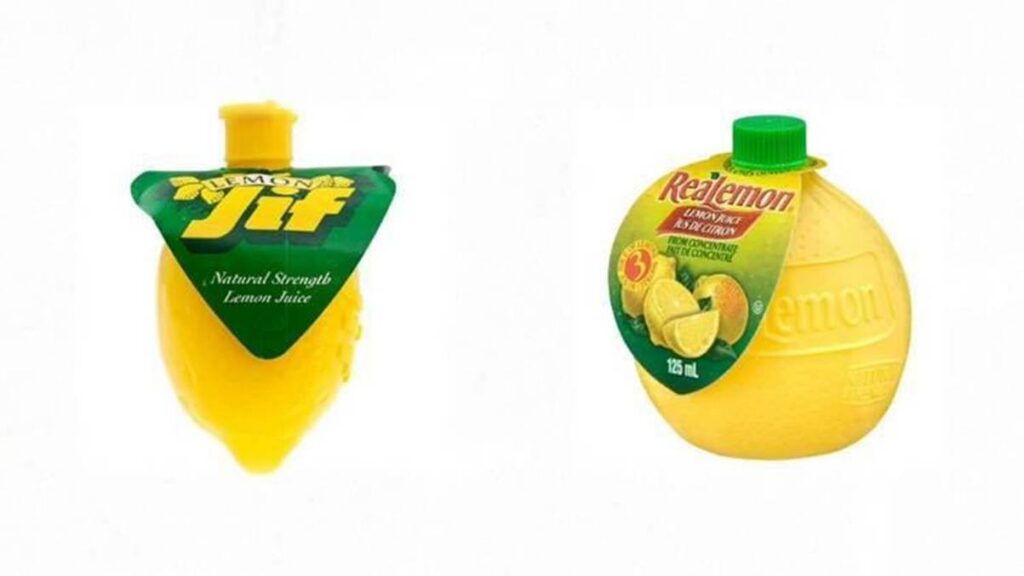
The Jif Lemon case is, however, somewhat of a rarity – while there have been a number of cases in which claimants have alleged passing off against defendants who have copied their packaging, such claims are not frequently successful.
Another exceptional case in which passing off was found in relation to packaging design was United Biscuits v Asda, which related to the claimant’s Penguin chocolate biscuits and Asda’s Puffin lookalike.
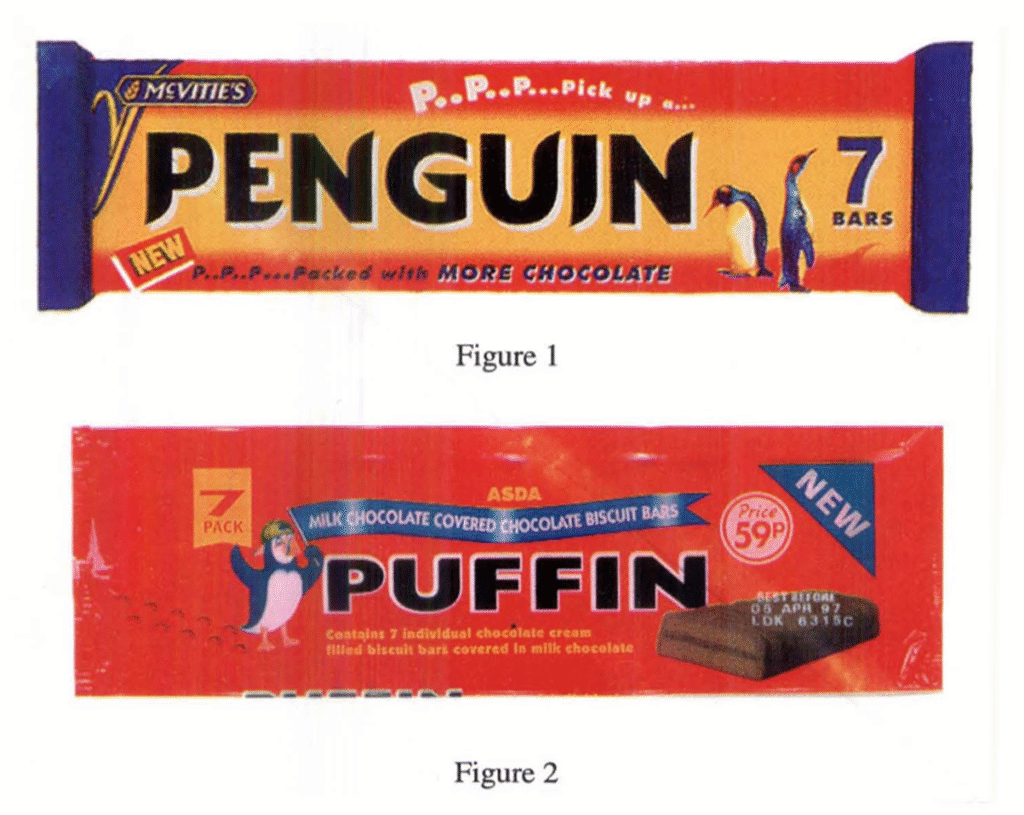
While the court found the use of PUFFIN did not infringe the PENGUIN word mark, there was found to be passing off on the basis of the similarities between the packaging of the products. A key factor in this case was the witness evidence of actual confusion between the products, namely a belief that they were made by the same manufacturer.
An example of an unsuccessful passing off claim for get-up was the Moroccanoil case, in which Aldi was sued by Moroccanoil for selling a lookalike “Miracle Oil” product. Here, the judge concluded that there was no misrepresentation; while Aldi certainly sought to ‘bring to mind’ the Moroccanoil product, which they successfully did, consumers were not confused as to the origin of Aldi’s product. This was for various reasons, including the differences between the packaging designs and the fact that Moroccanoil was significantly more expensive and sold almost exclusively via salons.
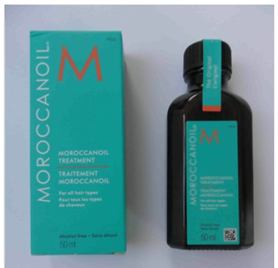
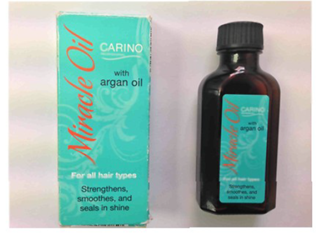
In the Moroccanoil judgment, it was noted that successful passing off cases relating to get-up are rare. This is because consumers do not generally distinguish goods originating from different competitors solely or even primarily by the packaging design and, as such, misrepresentation has to be demonstrated notwithstanding the different brand names on the products. This is particularly challenging where the brand names are distinctive and the claimant has to argue that consumers would not notice the different brand name, as in Jif Lemon. As such, those seeking to protect the shape or appearance of their packaging will generally struggle to do so through passing off.
Moreover, passing off is also not an ideal route for brand owners seeking to protect the design of their packaging – such cases are challenging and can be expensive to bring because of how onerous it is to provide sufficient evidence to prove both goodwill and misrepresentation. A lack of evidence of misrepresentation was the reason the passing off claim in Thatchers failed, and a common theme in lookalike cases such as Moroccanoil and Thatchers is that the defendant may be ‘living dangerously’ by trying to bring to mind the branded product when consumers see the lookalike, but this is not the same as deceiving consumers as to origin.
Copyright infringement
Under the Copyright, Designs and Patents Act 1988, copyright infringement occurs when a defendant copies the whole or a substantial part of an artistic work authored by the claimant.
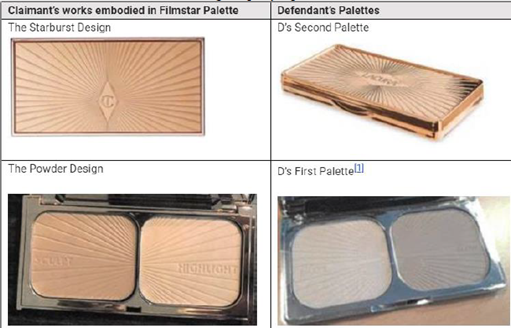
The Charlotte Tilbury case, in which Aldi reproduced a ‘starburst’ design on the lid of a makeup powder product as well as a geometric design on the powder itself, is one example of a successful copyright claim in a lookalike case, albeit in a very straightforward case decided at the summary judgment stage.
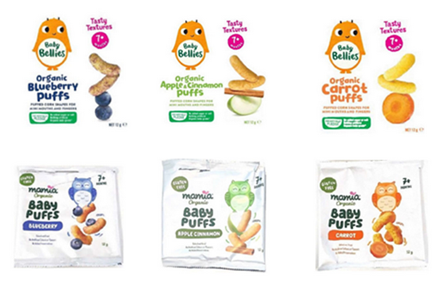
One other example of a successful copyright infringement claim for packaging design is the Australian case of Hampden Holdings v Aldi, where there was key evidence that Aldi had benchmarked its Mamia Baby Puffs products against Hampden’s Baby Bellies products, explicitly stating the designer should ‘follow the architecture’ of the Baby Bellies products and later stating that the design was ‘too close to the benchmark’.
Copyright infringement may be relatively easy to demonstrate where a simpler design has been obviously copied, but in cases of more complex packaging design (such as in Thatchers, where copyright infringement was not pleaded) it is likely to be more challenging to demonstrate that a ‘substantial part’ of the design has been copied if the defendant has intentionally made numerous changes to the design, including use of their house branding. Proving a substantial part of a packaging design has been reproduced is therefore likely to pose a significant burden for claimants.
Registered design infringement
A registered design can protect the appearance of a product, including its shape and decoration, but not its functionality. The design has to be new and make a different overall impression on an informed user to any existing design. Those holding a design registration can prevent others from using the same design, i.e. a design which creates the same overall impression as the registered design.
One successful design infringement case in the lookalikes field is the Infusionist Gin case, in which Aldi was found to have infringed M&S’s registered design rights for decorative gin liqueur bottles.
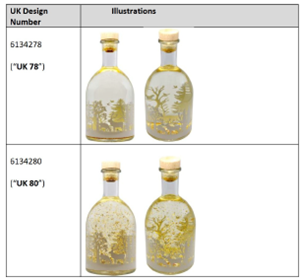
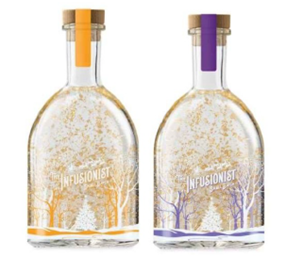
As the question is one of ‘overall impression’ and not of misrepresentation, lookalikes can be found to be infringing even where there are enough differences that consumers would not be confused as to origin or trade connection as would be required for the purposes of a passing off claim. Thus, the ‘Infusionist’ branding added by Aldi was not sufficient to distinguish its products from M&S’s.
Another similar recent case, albeit in the EU, was Rituals v Aldi, which took place in the preliminary relief court in the Netherlands. It was held that Aldi’s scent sticks infringed Rituals’ community registered design and copyright as they were too similar in appearance, and Aldi was required to discontinue sales within four hours.


Registered designs can provide a useful way of protecting the get-up of a product. One disadvantage, however, is that there is no substantive examination stage following an application to register a design. This means that a design can be registered even if it is technically invalid and then challenged and declared invalid at a later stage. This introduces considerable uncertainty into the scope of protection. Moreover, a design registration will not be valid if it was first disclosed more than 12 months before the design was filed, so a brand owner cannot protect the get-up of products launched over 12 months ago through this mechanism.
Trade mark infringement
Under section 10 of the Trade Marks Act 1994, the owner of a trade mark can prevent others from using:
- An identical trade mark for identical goods/services (section 10(1));
- An identical or similar trade mark for identical or similar goods/services, where there is a likelihood of confusion (section 10(2)); and
- An identical or similar mark for any goods/services, where the trade mark has a reputation and the use of the mark takes unfair advantage of, or is detrimental to, the distinctive character or repute of the trade mark (section 10(3)).
The Thatchers case demonstrates the value of a registered trade mark for packaging. The Court of Appeal, reversing the decision of the judge at first instance, found that the packaging of Aldi’s Taurus lemon-flavoured cider infringed Thatchers’ packaging trade mark under section 10(3).
As in the passing off cases mentioned above, the fact that consumers were not confused as to the origin of Aldi’s product (and Aldi did not intend such confusion) meant there was no liability under section 10(2). There was, however, plenty of evidence that Aldi intended to, and did in fact, take unfair advantage of the Thatchers mark:
- Aldi, in designing its Taurus lemon-flavoured product, benchmarked the Thatchers’ product and departed from its own standard Taurus style in doing so. In particular, the Court was shown an email in which an Aldi employee asked the design agency to ‘add lemons as Thatchers’;
- Aldi had imitated minor details from the Thatchers trade mark;
- Aldi achieved significant sales in a short period of time but without any marketing expenditure, and had not attempted to prove that it would still have achieved this level of sales using a different design;
- Consumers did in fact make a link between the Aldi product and the Thatchers product.
Section 10(3) may apply to a number of lookalike products, as it is typical for companies who produce such products to bring to mind a famous brand by using a similar get-up to drive sales of their own product without the need for significant marketing expenditure.
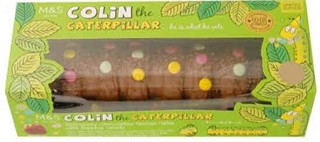
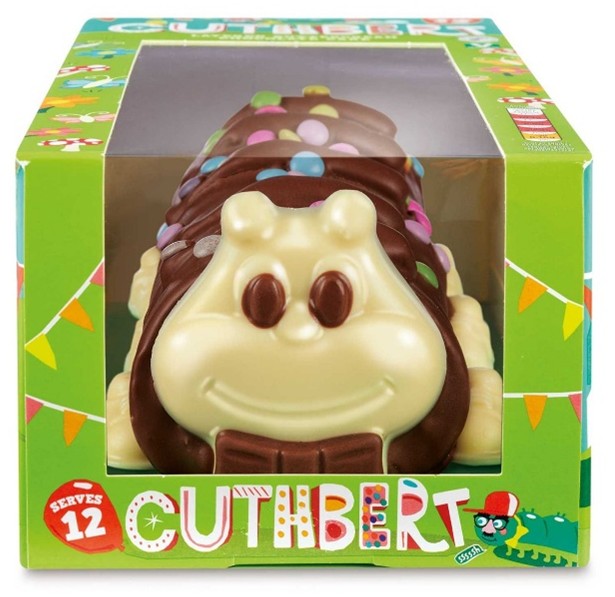
Other brands are taking a similar approach to Thatchers. Several years ago, M&S issued proceedings for trade mark infringement and passing off (which the parties ultimately settled) against Aldi in relation to its “Cuthbert the Caterpillar” product, a lookalike of M&S’s “Colin the Caterpillar” cake. M&S had registered the image on the left below of the box containing the caterpillar cake as a trade mark.
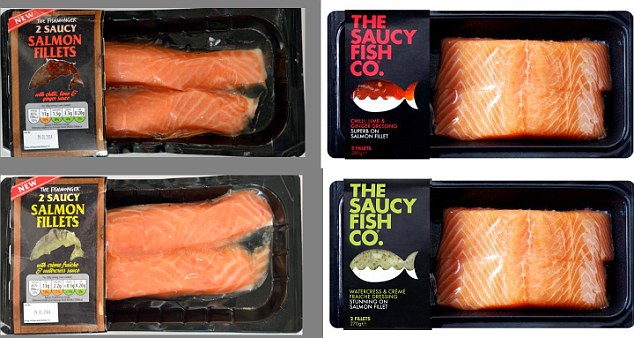
Furthermore, The Saucy Fish Company brought proceedings against Aldi and successfully secured an interim injunction on the basis of its packaging trade mark. This case was also ultimately settled.
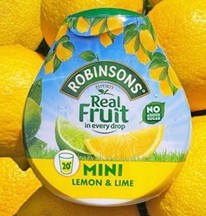
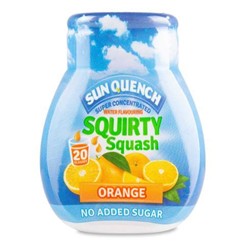
Most recently, in 2025 Robinsons issued a claim against Aldi for trade mark infringement and passing off. While the subject-matter of the claim is not yet public, it may relate to the get-up of Robinsons’ and Aldi’s mini squash bottles.
Summary
The M&S, Thatchers and Charlotte Tilbury decisions indicate an increasing willingness on the part of the Courts to protect brand owners against lookalikes through various causes of action, with section 10(3) of the Trade Marks Act 1994 becoming increasingly important. In the Thatchers case, they would not have been successful without registering the packaging as a trade mark.
Readers may recall that Lidl was successful against Tesco under section 10(3) in the Lidl v Tesco case, with the Court of Appeal dismissing Tesco’s appeal against the High Court’s finding that Tesco’s use of a yellow circle in a blue square in its Clubcard campaign infringed the similar trade mark of Lidl.
This line of case law is bringing us closer to the position in many European jurisdictions. Indeed, Arnold LJ in the Thatchers case noted that Thatchers would probably have remedies in various jurisdictions such as Germany under unfair competition law. We are also aware of similar packaging cases where trade marks have been relied on.
We therefore expect to see more cases targeting budget retailers such as Aldi specifically for trade mark infringement, as passing off is usually difficult to succeed on. Brand owners should consider filing for trade marks and registered designs for their packaging as the most efficient way to protect the “look and feel” of their products. The increasing number of cases against discount retailers may make such retailers more cautious moving forward and may provide additional leverage for brand owners during settlement discussions.
For completeness, the Digital Markets, Competition and Consumers Act 2024 (‘DMCCA’) also contains provisions targeted at misleading consumer practices including “any marketing of a product which creates confusion, or is likely to create confusion, with any product, trade mark, trade name or other distinguishing mark of another trader” (section 226(1)(c)). If it can be demonstrated that the average consumer will be caused to take a different transactional decision than they otherwise would have, this amounts to an offence, the penalty for which is a fine and/or up to two years’ imprisonment. That said, the Competition and Markets Authority (“CMA”) is responsible for enforcing the DMCCA and, given budget and resource constraints, may not prioritise lookalike cases over other cases involving more significant consumer harms. As the DMCCA only recently came into effect, it remains to be seen how much assistance the new regime will provide to brand owners.
If you have questions about the scope of legal protection for packaging designs, get in touch with us at Ionic Legal for clear, practical advice.